Look no further than here if you’ve ever wondered what coolant is and why you need it. You may have heard the terms antifreeze and coolant before, but do you know what they mean? I’ll go into detail about each of these words, then elaborate on why exactly you put them in your car. Let’s get started so you can have the most informed conversation with your mechanic when it comes time to ask them why they put coolant in your car.
What is coolant?
Coolant is a mix of antifreeze and water, which keeps the engine from overheating. It’s also called antifreeze or radiator fluid. The percentage of additives in the coolant is key to its functionality in your vehicle: A higher percentage of antifreeze will prevent freezing. At the same time, more water will help remove heat as it circulates through the engine.
Every vehicle has a different ratio requirement of antifreeze and water, so it’s essential to check your owner’s manual to see what ratio your manufacturer recommends before filling up on coolant.
If you don’t have access to the owner’s manual or have trouble understanding it, consult with a service professional for advice about which coolant is best for your make and model.
Types of coolant
There are a few different types of coolant, including water-based and ethylene glycol, propylene glycol, silicate-free, phosphate-free, hybrid, and others. Here’s the lowdown on these categories:
- Low toxicity. This type of coolant is basically non-toxic to the environment or humans.
- Silicate-free. This type does not contain silicates. Silicates act as a seal between the engine components and the coolant—that means that if there’s no silicate in this type of coolant, your car will require more frequent top-ups with sealers for protection against overheating. Phosphate-free. Does not contain phosphates (surprise!). These are similar to silicates in that they work as an anti-corrosion agent between your engine parts and coolant fluid.
- Extended life/hybrid/premium concentrated coolants. These have been formulated to last longer than conventional ethylene glycol formulations (around 240 000 km)
For most cars on the road today, an ethylene glycol antifreeze will be sufficient—it’s also one of the most common types available at many auto parts stores.
Cooling System Maintenance
Your cooling system is often neglected, but it’s as essential to your vehicle’s performance as any other part. A properly functioning cooling system will keep your engine running at an optimal temperature, prevent overheating, and protect your engine from damage. Follow these service intervals, and you’ll be sure to catch any potential problems before they arise:
- A coolant flush and fill: 2 years,
- Radiator cap replacement: 4 years,
- Hose inspection: 2 years,
- Water pump inspection: 2 years,
- Thermostat inspection: 4 years,
- Fan(s) inspection: 2 or 4 years (depending on the type of fan)
Do I need to flush my car’s cooling system?
Before we talk about your cooling system, let’s get a few crucial terms out of the way:
- Coolant. A liquid-and-chemical mixture is placed in your car’s engine to help regulate the temperature. This is sometimes called antifreeze or radiator fluid. Still, those aren’t actually different fluids—they just tell you what the coolant does. Coolant’s general rule of thumb is to change it every three years or 80 000 km (whichever comes first). Knowing this will help you spot when something isn’t right with your vehicle’s cooling system. For example, do you notice that your coolant has become brown or green? That usually means you haven’t had it replaced for far too long, and now the vehicle needs a cooling system flush.
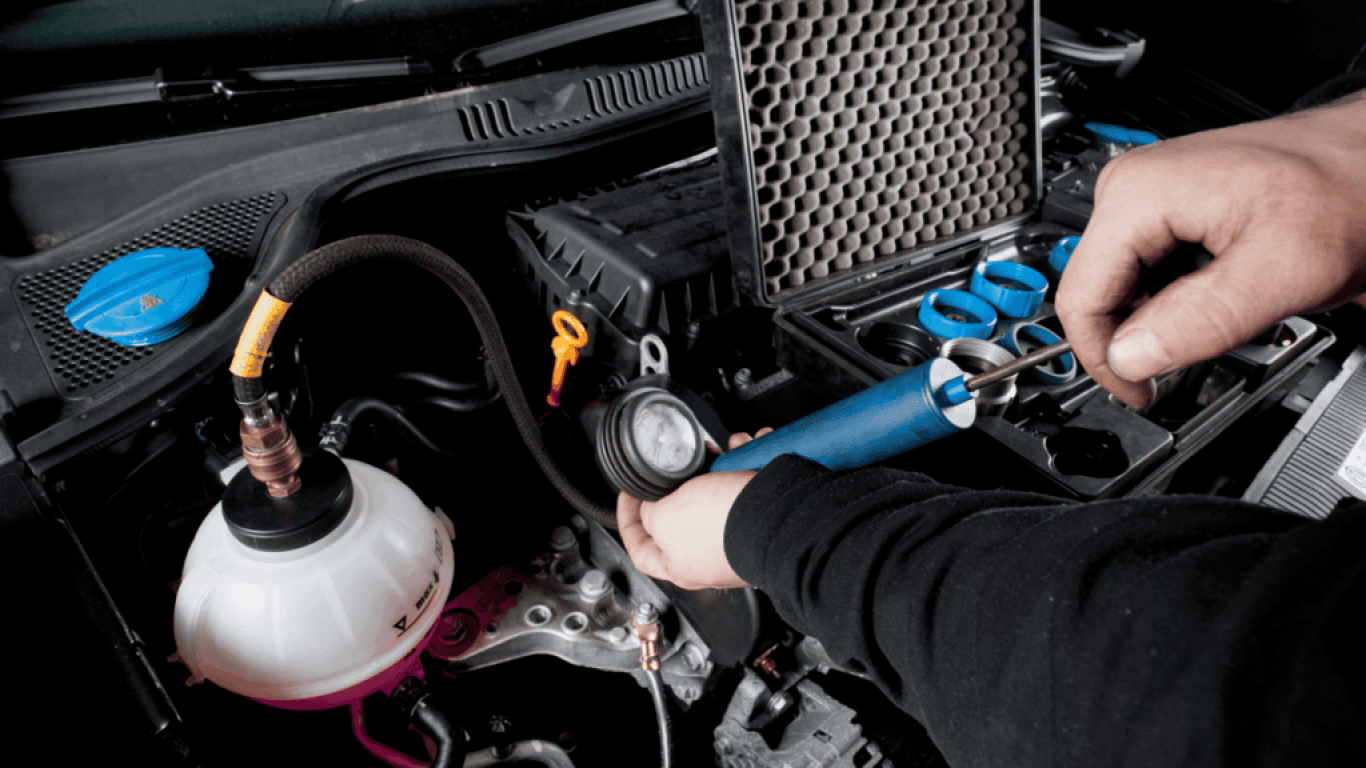
- Cooling System Flush. When all old coolants are removed from a car, and new coolants are put in their place, they usually use a machine hooked up to the car’s engine. It helps flush out anything harmful that could be trapped inside an engine, like rust or dirt particles caught in a radiator hose. Ideally, a certified mechanic should do this every two years depending on how much you drive and where; if it isn’t flushed regularly enough and old particles start building up in places they shouldn’t be, then acidic damage can occur over time—which nobody wants!
I would like a cooling system flush
Why does my car smell like antifreeze?
Maybe you stopped at a stoplight, and the engine started to sputter. The car was hot, and the coolant temperature gauge in the instrument panel read “high.” You may have panicked a little, but you weren’t driving far (just a few blocks).
A coolant leak is one of those things that can be scary and cause you to panic if you’re not prepared. There are two types of leaks and a few different methods of detection. The first method is what you see most often: checking your coolant level—you want it to be just below the top mark on your gauge. Check every week or so during warm weather.
The other method is to check for leaks with an infrared leak detector. The idea is simple:
- Place it on your driveway.
- Put the key in the ignition.
- Please turn on the detector and wait for about five minutes until it flashes orange or red, indicating an active leak.
Most of them will only indicate where there’s likely to be something leaking; if that area doesn’t already have leakage, there’s probably nothing wrong with your system!
Should I use water in my car?
There is a common misconception that it’s OK to use water in your car if you don’t have coolant. Usually, this is done as a temporary solution (ex. if your car needs coolant and you’re not close to a petrol station). However, it’s essential to know that any time your vehicle is on, the engine may be overheating—and when this happens, water will not be enough to keep the engine cool. Water does not contain corrosion inhibitors—so even though water might get the job done temporarily, corrosion will build up inside the engine over time and can lead to significant damage.
The short answer? Use coolant in your radiator whenever possible. Coolant contains additives that provide protection from freezing (in winter) and overheating (in summer) and two types of inhibitors: inorganic inhibitors for pH control and organic inhibitors for rust protection. These additives protect your radiator from corrosion and buildup, which leads to ideal conditions for the optimal cooling of an internal combustion engine.
Keep your vehicle running smoothly by ensuring that you have a sufficient coolant.
Coolant is a significant part of the engine, especially if you have an older vehicle. It is necessary to keep it at the correct level to ensure that your car or truck will run adequately and efficiently. Each year, vehicles lose coolant due to old coolant and water. Old oil also causes coolants to quickly break down because it does not help protect the system from harmful elements. The most common way this happens is when people fail to check their oil regularly until they get low on oil and need to stop at a gas station for more.
When a vehicle loses too much water or coolant, it can cause the engine to overheat and shut off, which can cause severe damage. When this happens, you will have some parts that are functioning correctly. Still, other parts may be damaged badly enough to be replaced entirely for your vehicle to continue running smoothly. It would be best to constantly watch your coolant level by checking how much liquid remains in your radiator. If you notice that it has dropped below what the manufacturer recommends, then it is time for a new bottle of fluid